Quick answer
For the launch build, start with food and water, establish a modest homestead, gather basic resources, learn the crafting flow, and treat combat and long expeditions as later priorities. Exact optimization remains under verification.
A cautious first-session route
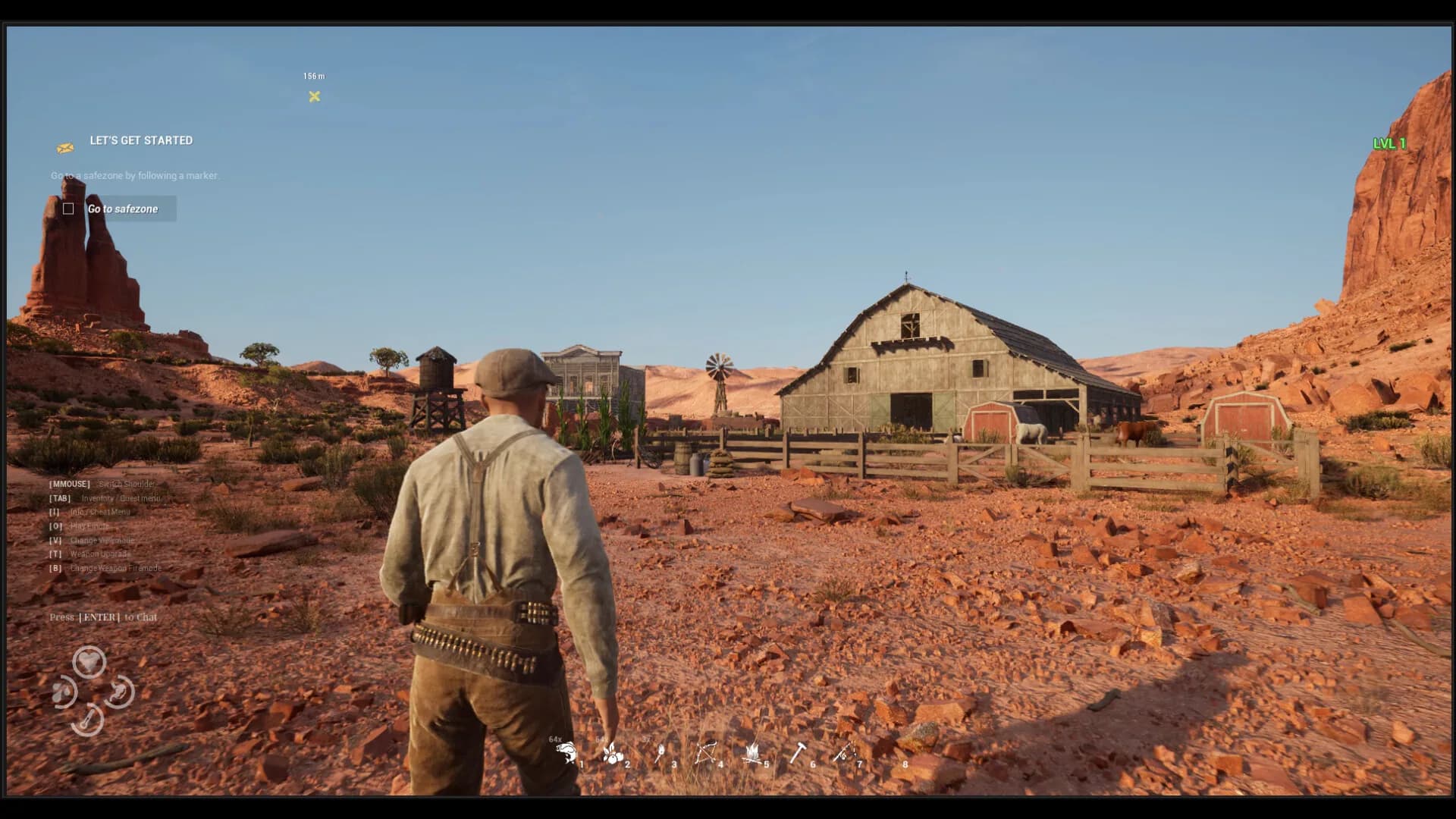
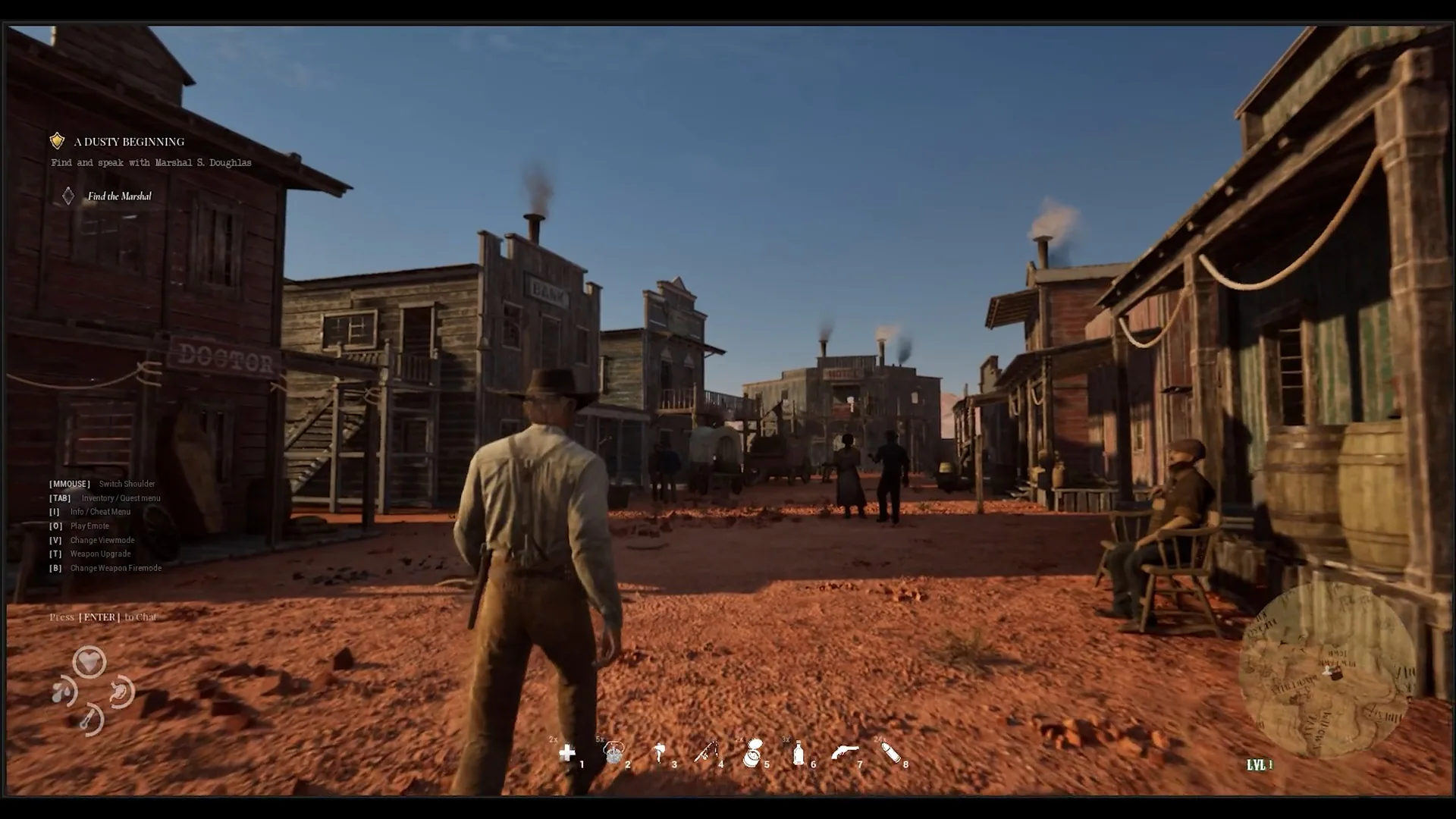
Western Rye's live Early Access build connects survival needs, homestead work, gathering, mining, farming, crafting, exploration, and combat. The safest opening approach is to learn that chain in small steps: understand food and water, gather nearby basics, establish a modest work area, and avoid committing scarce resources to a large build until the interface and local threats make sense.
This is a system-first route, not a speedrun. Exact opening objectives, item locations, vendor prices, and optimized priorities are still being verified against the launch build.
Secure the survival floor
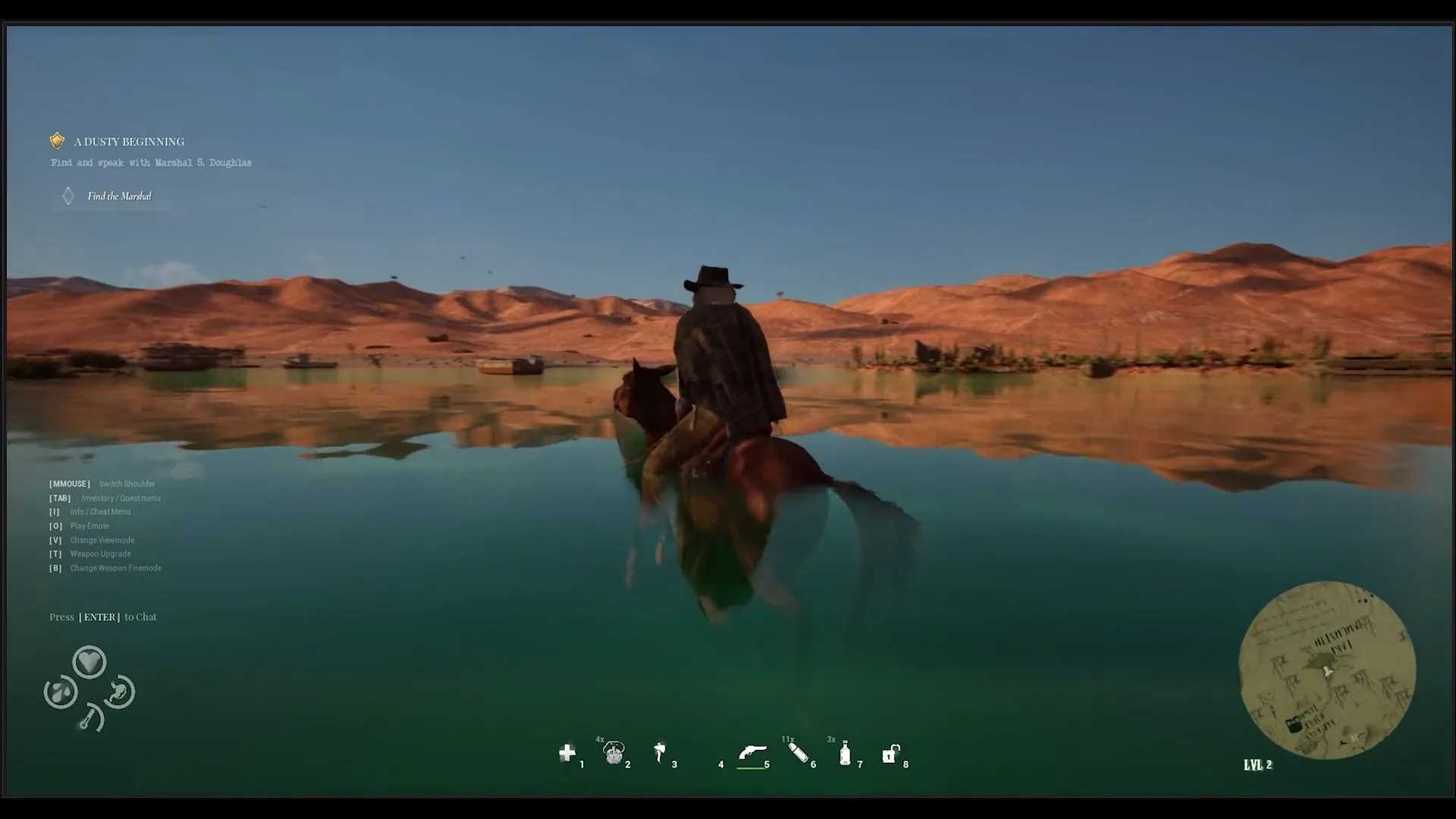
Official material confirms food, water, weather, hunting, fishing, cooking, and shelter. Start by identifying the visible meters and the actions that replenish them. Carry enough supplies to return from a short gathering loop before testing a longer cave or settlement trip.
Depletion speed, healing rules, status effects, death penalties, respawn behavior, and inventory loss do not yet have repeatable documentation here. Treat any old demo value as historical unless it matches the current build.
Build small before building permanent
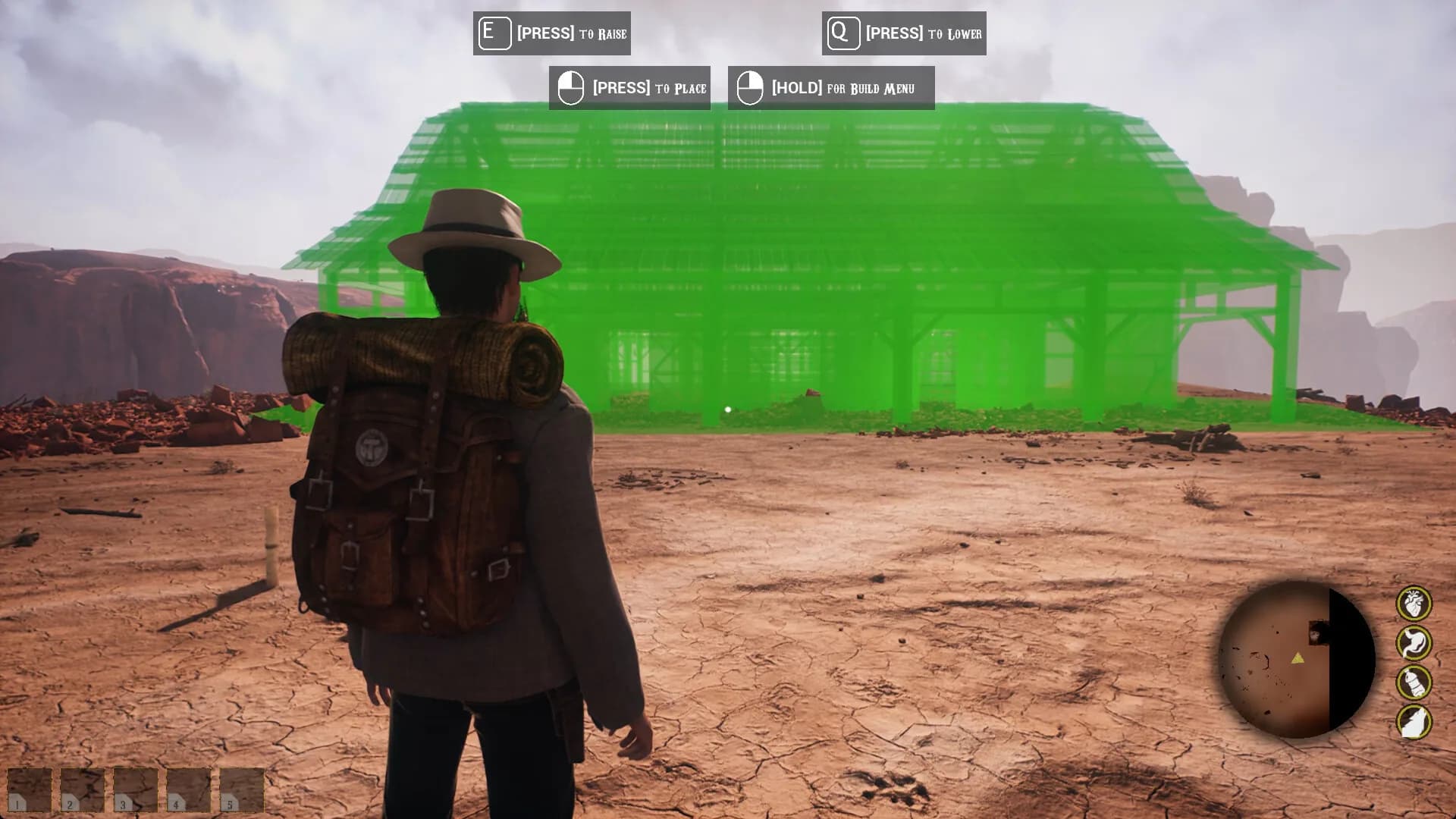
The published building set includes foundations, walls, roofs, doors, a water well, stove, furniture, and farm structures. A compact first homestead reduces the cost of discovering how snapping, access, storage, and workstations behave.
Current evidence does not establish exact costs, structural limits, item recovery, or a reliable move-and-dismantle workflow. Place early structures with room to adapt rather than following a claimed perfect layout.
Connect gathering to crafting
Wood, herbs, cactus, and mined ore are named resource inputs. Ore can be smelted into ingots, while crafting supports structures, tools, weapons, repairs, and equipment. The useful beginner habit is to learn where each material enters the chain before stockpiling it.
Exact recipes, station prerequisites, unlocks, crafting time, stack limits, and resource respawn behavior remain unverified. The dedicated recipes page stays outside the index until those tables can be reproduced.
Add crops and ranch work deliberately
Corn, wheat, beans, and barley are the four named crops, each described with four growth stages. Chickens, cattle, and pigs appear in the current official scope. Begin with a small plot only after you understand seed access, water use, and the surrounding survival load.
No reliable launch table yet establishes growth times, yields, sale value, feed, breeding, animal products, or the most profitable crop. Those numbers can change during Early Access and should be tied to a build version.
Explore and fight on your terms
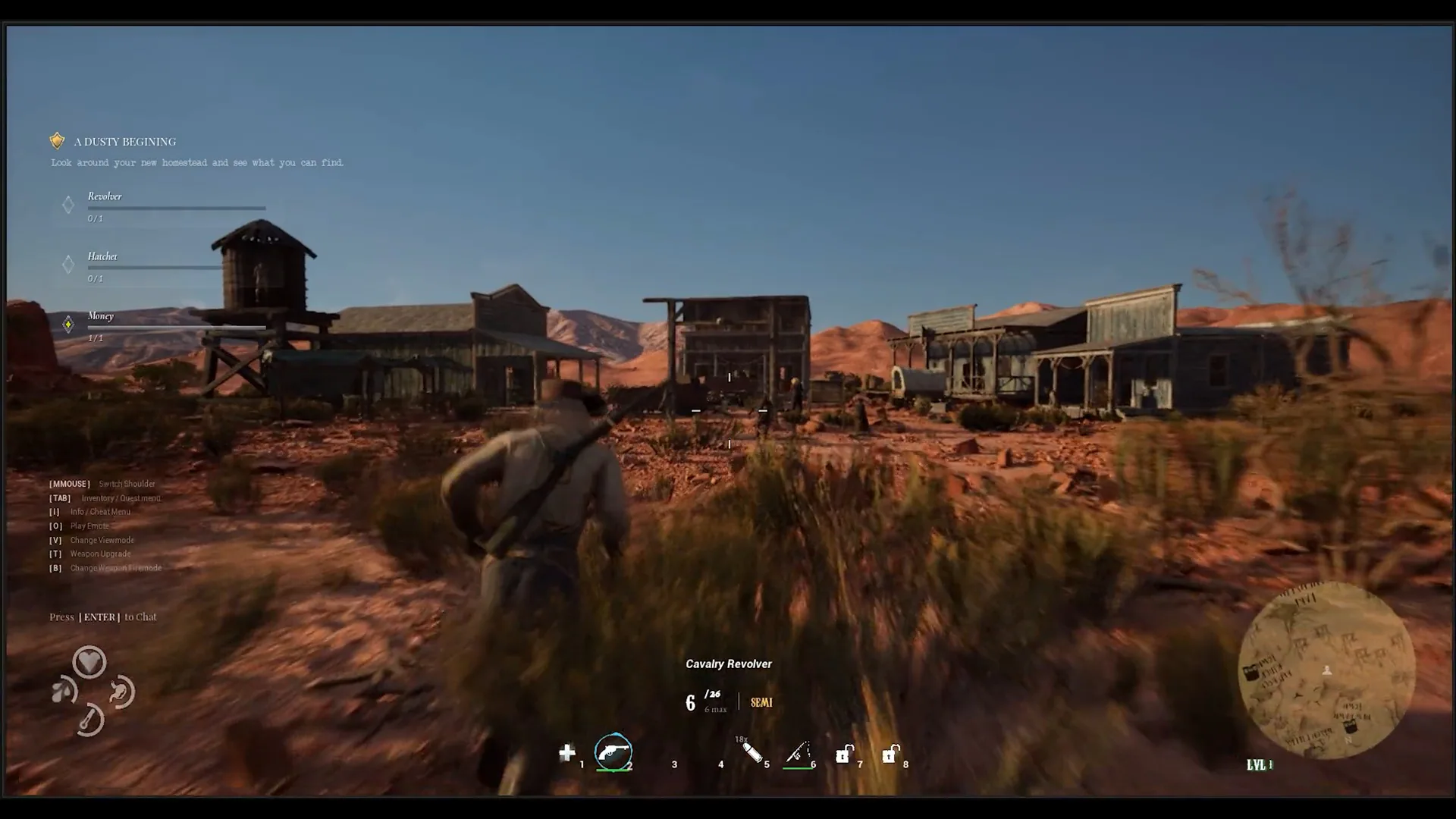
The frontier includes towns, caves, abandoned settlements, wildlife, Husk, outlaws or bandits, cultists, and hostile factions. Official material names revolvers, shotguns, and rifles or repeaters. It does not support a current damage ranking or exact location route.
Keep early expeditions short, note landmarks, and verify how saves and death work before carrying important materials far from the homestead. Performance reports also make crowded foliage and visually heavy areas worth approaching with caution on marginal hardware.
Solo and co-op launch checks
Steam lists solo, multiplayer, co-op, and online co-op, with official wording describing up to four players. If playing together, confirm who hosts, which player owns the world, whether guests can pick up and place items, and what persists after disconnecting.
One launch review reports failed item pickup and remapping in multiplayer. That isolated report is not proof of a universal problem, but it is enough to justify a quick interaction check before a long shared session. The co-op status guide maintains the current evidence boundary.
Sources & method
What this guide is based on
The factual core comes from the current official Steam listing, Nixalon Studios material, checked August 26, 2026. Early Access mechanics can change. Where the source does not publish a value or behavior, this guide says so instead of filling the gap with an estimate.
Open the primary source